The Benefits of Native Plants
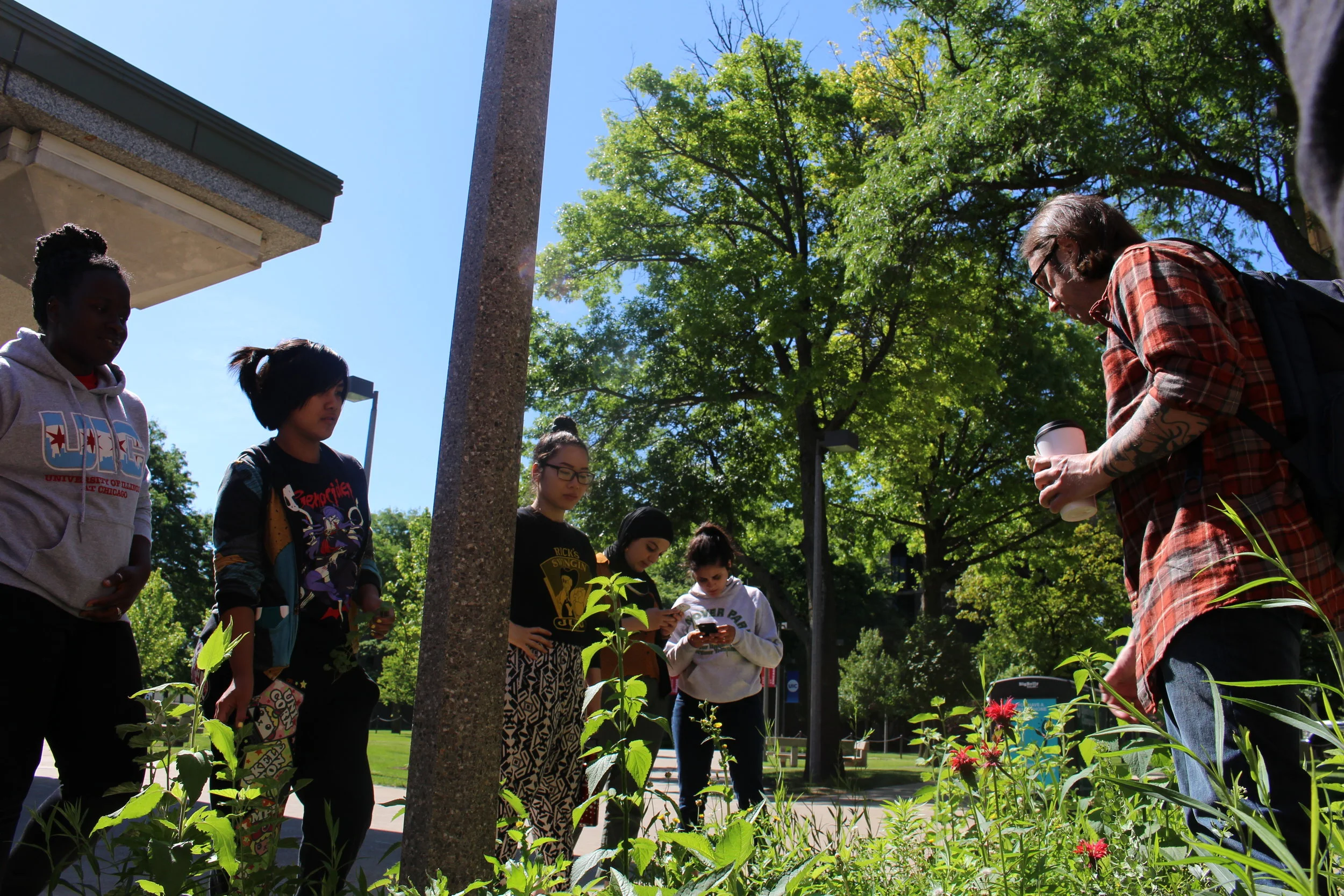
The Shikaakwa site at UIC is located in front of Lecture Center E (LCE), which is a grand lecture hall for undergraduate students. During heavy storms and flooding, the native plants retain the water, which helps avoid flooding in the lecture hall.
Did You Know? Use less fertilizers and pesticides: native plants create their own pesticides because their natural composition attracts and repels insects. (6)
Water Conservation
Native gardens use less water, due to its deep root system that retains water really well. However, pesticide is commonly used in lawns, but the high levels of chemicals not only damage the soil but also the water. Pesticides often end up in rivers and lakes, but, the native plants help reduce the contamination in these bodies of water.
The deep root system of many native Midwestern plants increases the soil’s capacity to stores and filters water. Native plants can significantly reduce water runoff and, consequently, flooding. The modern lawn requires significant amounts of water to thrive. Modern grass and other invasive plants have very short root systems, therefore, they cannot retain well. (6)
Picture of Prairie Burning. Prairie burning is another method for soil remediation that is commonly used in Native American communities, as it also has cultural significance. Burning rejuvenates growth and ensures long term survival, while maintaining the health of existing natural area that contain native plants. The fire helps manage weeds and other growth and this can help reduce the risk of wildfires. Burning also provides equal space for natural competition and helps store nitrogen in the soil. This practice is incredibly beneficial, as it ensures healthy ecosystem and ongoing biodiversity. (8)
Soil remediation
Some common problems that require soil remediation are: noxious weeds, invasive plants, soil contamination, soil compaction, soil erosion and improper hydrology (7). Often in contaminated or damaged soils there is a loss of nutrients, soil structure and ability to retain moisture. if there has been excessive removal or disturbance or topsoil, there may not be sufficient levels of nutrients to support a native plant community (7). At the UIC Heritage Garden, we have remediated the soil by turning the soil while mixing it with mushroom compost. We also do crop rotation, which means we change the location of our crops in order to preserve nutrients in the soil.
During our visit to the new American Indian Center on Wednesday, August 2 2017, we spoke to Fawn Pochel, the Education Coordinator, who told us about the cultural importance of prairie burning. According to Fawn, the banning of prairie burning has limited their knowledge and cultural practices, “when we can’t practice [prairie burning], the native plants no longer have a strong root system, but it also disrupts our ceremonies and how move through the season. When they banned it, it was part of the genocide of our community and the destruction of indigenous bodies” (3).